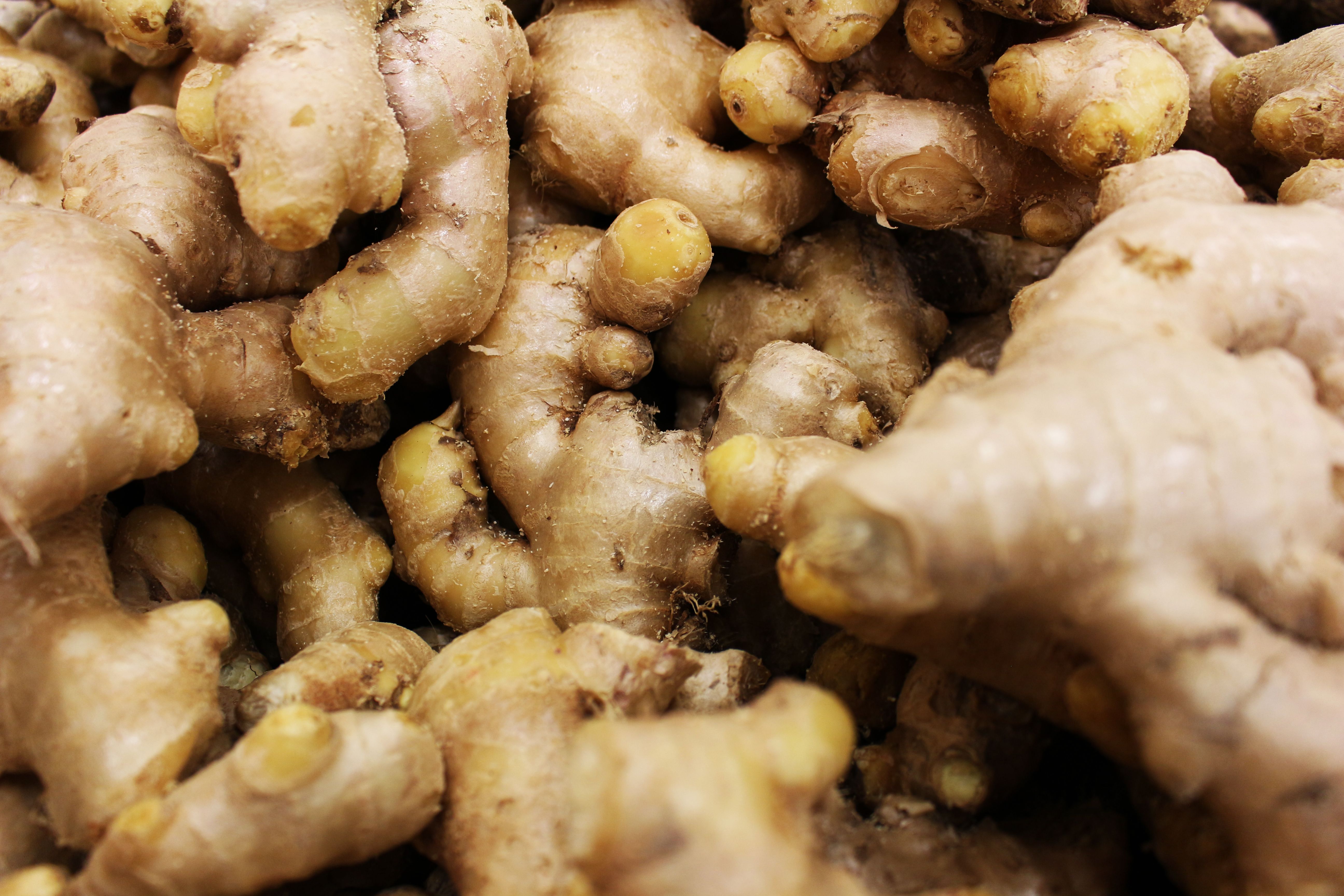
Shēng Jiāng - Fresh Ginger 生姜
Zingiberis Rhizoma Recens
Meet Shēng Jiāng
If the herbal world had a best friend, it would be ginger. Warm, reliable, a little spicy, and always showing up exactly when you need it. Ginger is the herb that's probably already sitting in your kitchen right now, quietly waiting to help. It's the herb that got me personally interested in TCM in the first place. When Western medicine had nothing to offer me during a bout of walking pneumonia, a simple ginger-based tea formula from a TCM course changed everything. That experience is a big part of why The Winding Path exists today.
Ginger has been used in Traditional Chinese Medicine for thousands of years, and it earns its place in the apothecary over and over again. It's one of those herbs that bridges the gap beautifully between food and medicine - humble enough to be a kitchen staple, powerful enough to appear in some of TCM's most important classical formulas.
The Basics
Pharmaceutical name: Zingiberis Rhizoma Recens
Taste: Acrid
Temperature: Warm
Channels entered: Lung, Spleen, Stomach
In TCM, the taste and temperature of an herb tell us a lot about its personality and how it works in the body. Acrid herbs are dispersing in nature - they move outward, open things up, and get things flowing. Warm herbs do exactly what you'd expect: they bring warmth to cold conditions, support circulation, and counteract the kind of cold and damp that can settle into the body, especially in winter.
Fresh ginger - Shēng Jiāng - enters three key organ systems: the Lung, the Spleen, and the Stomach. This makes it a remarkably versatile herb, capable of addressing respiratory issues, digestive complaints, and that general feeling of being run down by cold and damp.
A note on intensity: ginger's acridity and warmth can vary quite a bit depending on preparation and dosage. A few thin slices in hot water is gentle and soothing. A concentrated decoction with 10 grams is something else entirely. We'll talk more about this in the How To Use section.
What It Does
Disperses Wind-Cold and Stops Cough
In TCM, many common colds and early respiratory illnesses are understood as Wind-Cold invasions - the body's exterior has been penetrated by cold pathogenic factors, and we need to push them back out. Shēng Jiāng's acrid, dispersing nature makes it ideal for exactly this. It helps the body sweat out the pathogen, release the exterior, and restore proper defensive function.
In plain terms: if you feel a cold coming on, especially with chills, a runny nose, and no fever or very mild fever, ginger is one of your best allies. Paired with Cōng Bái (the white part of a green onion), it becomes even more effective for these early stage wind-cold presentations as a simple, powerful combination that's been used in Chinese households for generations.
Ginger also warms the Lungs and helps stop cough, particularly coughs that come with thin, white or clear phlegm, the kind associated with cold and damp rather than heat.
Warms the Middle and Harmonizes the Stomach
The Spleen and Stomach in TCM are the center of our digestive fire. They transform and transport everything we take in. Cold in the middle burner can cause nausea, vomiting, digestive discomfort, and that heavy, bloated feeling after eating. Ginger warms this whole system and gets things moving again.
This is why ginger tea is so instinctively soothing when your stomach is upset, and why it's one of the most well-known remedies for nausea, including morning sickness. It harmonizes the Stomach, settles rebellious Qi (which in TCM is what causes nausea and vomiting - Qi moving upward when it should be moving downward), and restores digestive comfort.
Detoxifies
This one surprises people. Ginger has a significant detoxifying function in TCM. It can help address seafood poisoning, and it reduces the toxicity of other herbs. In fact, many potentially toxic herbs in the Chinese Materia Medica, including Ban Xia (Pinellia) and Fù Zǐ (Aconite), are traditionally cured or processed in ginger juice specifically to make them safer to use. This is why you'll often see Jiāng Ban Xia (ginger-processed Pinellia) listed in classical formulas. Ginger isn't just along for the ride, it's doing important safety work behind the scenes.
Adjusts Nutritive and Protective Qi
This is a more nuanced function that practitioners will appreciate. Shēng Jiāng has the ability to harmonize the relationship between Nutritive Qi (Ying Qi, which flows within the channels and nourishes the body) and Protective Qi (Wei Qi, which circulates on the exterior and defends against pathogens). When these two are out of sync - as they often are in exterior patterns - symptoms like spontaneous sweating, chills, and vulnerability to wind and cold can arise.
Ginger's ability to address this imbalance is one reason it appears in Guì Zhī Tāng (Cinnamon Twig Decoction), one of the most foundational formulas in the entire classical canon, where it works alongside cinnamon to restore this harmony.
How To Use It
Standard dose: 3-5 slices of fresh ginger root, up to approximately 10 grams
Form: Fresh root is preferred for most of the functions above. Dried ginger (Gān Jiāng) is a related but distinct herb with stronger interior-warming properties. We'll have more on that below.
Fresh ginger is most commonly prepared as a tea or decoction, added to soups and broths, or incorporated directly into food. For acute wind-cold, a simple tea of fresh ginger slices simmered in water, especially with a few Cōng Bái, can be taken warm and followed by rest under warm covers to encourage gentle sweating.
For nausea, even small amounts of ginger, such as a few slices steeped in hot water with honey, can be remarkably effective.
In The Kitchen
Ginger is one of the easiest herbs to incorporate into daily food medicine practice because it's already a culinary staple. A few ideas:
- Shēng Jiāng Tea: Simmer 3-5 slices of fresh ginger in 2 cups of water for 10-15 minutes. Add honey and lemon to taste. Warming, soothing, and deeply supportive for colds, nausea, and cold-damp conditions.
- Ginger Jujube Cider: One of our favorite recipes here at The Winding Path - fresh ginger simmered with jujube, cinnamon, and Asian pear for a deeply nourishing, immune-supporting drink.
- Add to broths and soups: A few slices of fresh ginger added to any broth transforms it into something more medicinally supportive, especially during illness or recovery.
- Cooking with ginger: Regular culinary use of ginger incudes usage in stir fries, marinades, and soups. It's a simple and delicious way to keep your digestive fire warm and your immune system supported through the colder months.
A Word of Caution
Ginger is warming and acrid, which means it's not appropriate for everyone in every situation. Avoid or use cautiously if you have:
- Stomach heat: signs include burning sensation in the stomach, acid reflux, or a strong thirst for cold drinks. Ginger's warming nature can aggravate heat conditions.
- Throat or esophageal inflammation: for similar reasons, ginger's acridity can be irritating to already inflamed tissue.
- Yin deficiency with heat signs: if you tend to run hot, have night sweats, or a red tongue with little coating, consult a practitioner before using ginger therapeutically in larger amounts.
As always, consult a qualified healthcare provider before using any herb therapeutically, particularly if you are pregnant, nursing, or managing an existing health condition.
Practitioner's Corner
A few notes for those with a TCM background:
Shēng Jiāng is distinct from its dried counterpart Gān Jiāng (dried ginger root), which is significantly warmer and more focused on interior warming - particularly of the Spleen and Kidney Yang. Fresh ginger is more dispersing and exterior-focused; dried ginger goes deeper and warms more aggressively. They are related herbs but not interchangeable.
Shēng Jiāng Pí (the peel of fresh ginger) is a separate medicinal with quite different functions. It promotes urination and treats edema, making it a common inclusion in formulas addressing water metabolism.
Shēng Jiāng appears in Guì Zhī Tāng alongside Guì Zhī, Da Zao, Bai Shao, and Zhi Gan Cao, where its role in harmonizing Nutritive and Protective Qi is central to the formula's mechanism. It also commonly appears as a preparation vehicle for toxic herbs. For example, Ban Xia processed in ginger juice (Jiāng Ban Xia) is perhaps the most familiar example.
Standard dose is 3-10g in decoction. Fresh slices (typically 3-5) are standard in clinical practice.
This post is part of The Winding Path Single Herb Series.
For educational purposes only. Please consult a qualified healthcare provider before using herbs therapeutically.